Farmyard Gourmands

Pasture raised, forage-fed animals - a blast from the past

Talking to Ghosts

Remembering the skills and traditions of our ancestors.

Eat Your Veggies!

Living a healthy, fad-free lifestyle making good, slow-food choices.

From the Heart to the Tummy

Delicious foods from Nature's bounty calls for delicious recipes.

Responsible Lifestyles

Eco-friendly is not a swear word but a by-word for survival in a modern world.

Showing posts with label cookbooks. Show all posts

Sunday, January 26, 2014

Quick and Easy: Red Pepper Chipotle Soup


Free those radicals baby!

Aging. Aging has been on my mind lately or rather aging skin and appearance has dominated my thoughts especially as I have the best seat in the house to watch my own farcical attempts to retain youth. I have become a great fan of Oil of Olay, scarves and low light and they do their best to make me believe this old gal is aging gracefully. In my quest for extended youth I have turned my thoughts to how to achieve this through food. Everyone knows or should know that a balanced diet, plenty of sleep (unaided if possible) and consistent exercise will help you to feel better, look better and live healthier. What I am interested in is which foods will help you to achieve this perfect balance. The short answer? Anti-oxidants to destroy free radicals and essential fatty acids to feed your skin and hair the good stuff. But what does that mean?

Taking it to the limit

I have always had an intense and keen interest in food nutrition and an intense and keen dislike for diets. I don't care who is flogging the diet - doctor, fitness guru or celebrity - these quick-fix, short-term Bandaid* solutions doom you and your health to failure. In great confidence they attempt to sell you a 'cure-all' for whatever ails you from losing weight to managing an illness to avoiding a particular food group to narrowing down your food choices to a particular food group for personal morality reasons. Vegan, Gluten-free (non-medicinal), Vegetarian, Paleo, Raw, Juicing - all proponents claim that their way is the right way to feed your body and improve your health. How can they all be right? Well, they're not, not really. 

Eating right for weight loss purposes requires a balance of need and want. We want tasty, rich, satisfying meals but we need vitamins, minerals, proteins and carbohydrates in appropriate numbers or our child-like glee at meal times will mean tears at the doctors and wails at the bathroom scale. We want to have fun but exercise needs discipline. We want to live in the here and now but we need to think of our future selves' welfare more often and take our aged selves more seriously. We live like we hate the person we will become and are doing our best to get a jab in now.

Following an eating plan tailored to those who suffer from Celiac's disease, irritable bowl disease or irritable bowl syndrome, Crohn's disease when you don't actually suffer from them puts your body into an imbalance.  We fall for these miracle food cures because the human body is a remarkable machine that will carry on until it can't. What that means is we are like clockworks with tiny parts, large parts - all working together to keep us going. It will work with minimal maintenance but eventually the gears will grind, teeth will snap off, metal will squeal and finally the clockworks will come to an abrupt stop.

For optimal health of the machine, we require this balance. For functioning and staying at work for about eight hours a day, doing minimal physical activity you can get by with an imbalanced diet… for a while anyway. Think of all the times you have had to forgo meals or eat inferior take-out because of scheduling. What happened before you next ate or ate properly? Feel lightheaded? Tired? Grumpy? Did you kill a small antelope with your bare hands on the way to the restaurant, as an appetizer? Multiply that by months, even years of eating without all the necessary nutrients in the necessary numbers per day and you get the picture. A healthy body, whether by design or luck, needs food from all the necessary groups containing all the necessary nutrients. An ill body needs a diet that will ease suffering and provide relief from the symptoms and/or flare-ups. It is by no means a perfect solution but it is an important one for the sufferers.

Eliminating a food group from your menu plans for moral reasons is purely a personal decision that is based upon a misguided perception of the human condition and an overestimation on our place in the food chain. In an effort not to be dismissive of Vegans and Vegetarians I will say that no one can gainsay their emotions and sensitivity to the natural world. Their hearts are in the right place. That said, I believe they are in error with their judgement. The common argument for one half seems to be for a belief in the sanctity of all life (in this case it seems to be the cute and cuddly mammals) so they refuse to eat anything with a face or benefit from their natural processes such as cheese and milk even though the bovines are still chewing the cud while this goes on. We are animals with our place in the food chain and quite frankly we aren't better than the other animals. We are exactly like the other animals and to me, refusing to take your place in the food chain causes a disassociation with what we are and where we stand on this planet. We are animals that now raise food instead of hunt it. The other half seems to veer between saving the planet from the flatulence emanating from over-produced livestock and a belief that we were not supposed to eat meat in the first place. Apparently red meat has the distinction of being a serial killer from which there is no escape. Yes, a bit of facetiousness but hey, wouldn't be me if I didn't indulge now and then.

As for the Paleo, Juicers and Raw dieters… can we say crystals, shamans and running naked in the forest chanting to the stars? Harsh yes, it would be if I was 100% serious (only sitting at 85%)  but what they are doing is harsher still. They are informing a vulnerable public of half truths and misconceptions and, dare I say it, phoney science. 

Simple truth is we are not Paleo-man, we have evolved to adapt to our surroundings like every other animal that has survived thus far. 

We cannot extract all beneficial nutrients from raw vegetables and fruits. Sometimes like in the case of today's recipe, certain foods require heat to extract all valuable nutrients. 

Juicing is a fantastic way to boost your morning breakfast routine or to have as a go-to snack but it isn't the best way to eat all the time. Fibre from eating the skins of the fruits and vegetables in their unprocessed form is important for our digestive systems - the Raw fooders have that right at least. Yes, you can make smoothies using the whole fruit but again, the breaking down of the insoluble fibre has already begun before it even hits your digestive system. By all means juice, just don't juice alone. In fact, these diets can be an interesting way to break up your routine once in a while, just like going meatless a few days a week can be a good thing. 

When it comes to the next best thing in the bookstores, keep in mind that common sense is the best editor/publisher of your own cookbook.  Do your research and get out the red editing pen! 


Seeing Red

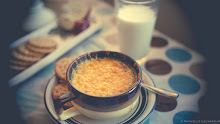
This extremely simple and inexpensive soup is loaded with the good stuff. What you see above is essentially all the ingredients needed - add some broth and 10% cream and we're done.

So what's the good stuff Michelle? 
Well pipe down and I'll tell you.

The star of the show is the red peppers. While all the ingredients will do something lovely to your body, the red peppers are a powerhouse of nutrients that will blow your tasty buds and your mind. The rainbow of colours found in vegetables can give you a good idea of what good stuff resides within. Starting with green and ending in red, peppers at every stage offer a plethora of nutrients we need. Red peppers contain the highest amounts of Vitamin C as well as A,E and almost all of the B vitamin complex. Red vegetables also contain lycopene, the nutrient I referred to that multiplies when the foods such as tomatoes and red peppers are heated. This is due to the breaking down of the cell walls which allow more of the lycopene to be extracted. 
A can of crushed tomatoes will have more lycopene than a can of whole tomatoes which will have more than the equal amount of tomatoes just picked from the garden. 
This is directly attributed to the sterilization process of the industrial canning. After the cans are sealed, they are heated to a certain temperature. In the case of crushed tomatoes, they are heated twice - once in the crushing and again after the can is sealed.

Why is lycopene important? It is an anti-oxidant that has been linked with a decreased risk of many cancers including colon, stomach and cervical cancers and it can help lower the risk of heart disease.  For my immediate purposes, it also helps to prevent UV damage caused by the sun and is actually used in anti-aging creams.

The other but by no means lessor actors in the show are the allium family, the leeks and the garlic followed on stage by the benefits of orange oil and thyme. The allium family also offers a lot from the vitamin B complex as well as varying amounts of minerals, most notably manganese and a whopping amount of vitamin K in the leeks and an even greater whopping amount of vitamin B6 in the garlic. The thyme and the orange both contain vitamin C with a mega amount- 266% of our daily requirements - found in the thyme!

What you need to know

Knowing how to clean leeks efficiently is the only necessary technique you need to know. The best way is to cut of the dark green end about half an inch into the dark green. Then with the sharpest knife you feel comfortable with, insert the tip about 1/4 inch down from the root end all the way through to the other side and draw the knife through the leek as evenly as possible all the way down the length to the end. Under running water, gently separate the layers of the leek just enough to get the water in and wash well. Leeks grow in sand so they do tend to drag in some dirt as they grow and are trenched. Shake out well and then proceed to prep your leeks for your recipe.

Putting it all together


1 leek, washed, chopped                                                                                                       serves 4
2 garlic cloves, minced fine
1 jar 500ml (2 cups) roasted red peppers
4 chipotle in adobo, chopped
1.3L chicken broth (two tetra packs 3.75 cups each)
1 cup 10% cream
1 tsp orange zest
salt and pepper to taste

In a heavy-bottomed soup pot, sautĂ© the leek and garlic. Cook until the leek softens; add peppers. Cook for 8 minutes. Add broth/stock; bring to a boil. Reduce heat and simmer for 5 minutes. Process using a hand blender. Add the cream, salt and pepper to the pot as you reheat and add the zest to the bowls just before serving.

You can add fresh pasta, or dried that has been cooked already, to the soup. The first time I made this I added poached chicken and farfalle (butterfly/bowtie) noodles. This last time I made one half plain, pictured above, and one with leftover fresh linguine noodles, cut into one inch pieces.

Stay tuned to the next recipe where I "visit" Mexico for a tasty burger and get a recipe for the simplest mushroom soup anyone can make…like say a man with no kitchen experience could make it for his loved one on Valentine's day…just a thought :) 

Be safe. Be happy. Be well.


all photos and text ©michelle levasseur The Groaning Board 2014

Sunday, November 11, 2012

History in the Making Part Three


So, we've learned a bit of cheese history, and how it is made--at least fresh cheeses--and picked up a few ideas for rainy day busy-work...Now let's get to the fun stuff!


Basic after dinner nibble: old cheddar, Meddo Belle, Mennonite sausage      Wine: Nugan from Australia


Entertaining with Cheese
Sparkling candlelight, the murmur of pleasant conversation, gentle clinking of silverware upon china; rings upon crystal, the sounds of smoky jazz playing softly in the background, the burst of grape or hops on the tongue, the mounds of delicacies arranged on trays, enticing the eyes to sate the stomach...the classic sights, sounds and tastes of a cheese and wine party with friends or strangers-soon-to-be-friends. The lovely bit about a cheese tasting party is that it goes with every occasion, from wedding showers, dinners for two to a Superbowl Sunday get together--it doesn't just have to go with the stereotypical elegant cocktail party.


A wine/beer and cheese get together is a wonderful opportunity to experience local foods and drink as well as the accompanying sides, such as fruits and breads. Pairing local produce, cheese and the wine/beer produced in the same area is one way to ensure an easy and successful tasting. At one time in history, it wasn't heard of to have wine and cheese from outside the local area. These items were usually produced and consumed within the same geographical spot. If you are in an area sparse in local wines or beers, then the second point to remember in pairing drink with cheese would be essential to follow: keep your choices light and simple. White wines pair better with cheeses, except with in the case of red wines that have a low tannin content. Strong and rich red wines are generally ideal with more pungent cheeses-think Stilton and Port. A dry or fruity white wine will pair with most cheeses as long as you keep in mind what other qualities are found in the cheese such as spices, herbs or another other factor that will influence the taste of the drink.

While it is impossible to give absolute recommendations in your pairings there are some tried and true suggestions:
photo credit: michelle L. 2012

Wine
~For all Cheeses: light, low in alcohol and tannins such as Riesling, Silvaner
~Soft Cheese and Goat Cheese: rosé, dry sparkling wine or champagne
~Blue-veined: strong reds with a sweet note
~Hard Cheeses: hardest to pair, pardon the pun, but stick with the light white wine.

Beer
This is more difficult as a there are a vast range of flavours; almost too much choice. 
I personally taste tested with Okanagan Springs Pale Ale and I found it went well with all the cheeses I tried--including the Stilton.


~Fresh cheeses: American and German lagers, wheat beers
~Soft cow's milk cheeses: pilasters and pale ales
~Washed-rind cheeses with some pungency: English brown or amber ales
~Semi-firm: Belgian ales, pilasters
~Hard and Blue-veined: stronger porters, stouts and heavy dark beers


The most important thing to choosing the right beer is to choose one without much of a bitter note in the beer. A strongly bitter beer is going to add a taste to some cheeses that will turn on the tongue to something unpleasant. Try a craft beer or an import for a variety of options beyond the commercial domestic brands, which I do find contain a finishing bitter note.

Cheese
Allow for a third of a pound per cheese per person as a guideline for a smaller sized get together or one that is followed by a meal; a larger gathering needs a bit more to be a filling 'meal'. You will want to not overload the tastebuds by presenting too much variety in your cheese choices. Three or four complimentary tasting cheeses covering a few different types of is ideal, for example: a blue, a Camembert, and a 4 year old Cheddar will go lovely together. Serve your cheese at room temperature, letting it sit for no longer than two hours before serving, for safety reasons.


Serve your cheese choices in order of taste-mild to strong, finishing with the strongest tasting cheese. Alternatively if serving all at once on a board, include a label with each cheese describing the qualities of each cheese with the recommendation of the order of consumption.
photo credit: michelle levasseur


Serve in the following order:
~Fresh and goat cheeses
~Bloomy and washed-rind cheeses
~Semi-firm cheeses
~Firm cheeses
~Blue-veined cheeses
~Hard cheeses

Arrange your cheese board, if using, with large pieces of cheese rather than slices of cheese for a buffet gathering as they do not dry out as quickly. Alternatively, cover your tray of sliced cheeses with plastic wrap just before setting out your board. 

Round soft cheeses such as Brie should only be cut into fat wedges. Your guests can cut the rind off themselves with their individual knives. Wax coated cheeses should have the rind removed already for greater ease of handling for your guests and cut into thinly sliced wedges. Hard cheeses can just be broken off with a forked cheese knife either by you or your guests.

Equipment and Presentation
No matter the occasion, a wine/beer and cheese party requires a few items for serving and eating.
Forgo the plastic boards, utensils or platters. Wooden cutting boards, marble slabs with or without wire cutter, and china are ideal for serving.

The following items won't be necessary for every occasion but can be selected from as your party needs change.

~Rimless platters of different sizes and shapes
~Wooden boards or
~Wooden-base cheese bell
~Knives with forked tip -for individual use
~Mini-boards or small plates for individual use
~Large two handled knives (for larger gatherings: larger pieces of cheese to cut from)
~Cheese wires and knives for cutting -one per cheese to avoid mingling of flavours
~Labels for cheese identification 
~Wine glasses, red and white
~Champagne flute (only if serving champagne)
~Half-pint beer glasses
~Small sherry glasses if experimenting with an Icewine and Roquefort pairing, for example
Cheese Bell       google images


There is no real need to purchase extra equipment unless you have an adequate disposable income and love to shop. If you love a bargain and/or are on a budget, try a store like Value Village or your local thrift store to find glasses, platters and the like for a very cheap price.


Side dishes and Garnishes
For an elegant note to a wedding shower and events like it, you can cut cheese into bite-sized appetizers and 'dress' them in different garnishes, all served with a toothpick inserted for ease of eating.

Garnishes
~Combine a mild semi-firm cheese with a blue-veined cheese. Sandwich a slice of blue between two slices of your choice of mild cheese and cut into cubes.
~Top Emmental and Swiss with a walnut--pairs nicely with the nutty flavour of the cheese.
~Cheddar goes very well with a chile pepper or a dollop of chile relish on top of a round of very old cheddar.
~Roll cubes of aged Gouda in sweet paprika or stamp out with a cookie cutter and dip one side into sweet paprika.

Side Dish Suggestions
Serve your cheese board with crusty, fragrant, soft-centred breads, fruit and nuts.

~Wedges of apple and pear, dipped in lemon juice to retard oxidation, for stronger cheeses 
~Grapes and berries for a palate cleanser between cheese courses
~Assortment of walnuts, pistachios and pecans, for a sweet note
~Italian, sourdough, French baguette

Storage
Since cheese is a living product that continues to ripen and change after manufacture, storage is an important part of keeping your cheese fresh and tasting as it should. The temperature where you store your cheese is also important, enough so that refrigerator companies make a special compartment just for your cheese. You can also store your cheese in a cool, dry cellar or pantry as long as temperatures do not exceed 54℉ for short term storage and 39 to 42℉ for longer term storage.

For cut cheeses
~Blue-veined cheeses should be wrapped with aluminium foil that has perforations in close spacing.
~Hard cheeses can be wrapped with plastic wrap.
~Soft cheeses should be wrapped with parchment paper or a damp cloth that is moistened daily.
Store all cheeses in the compartment of your refrigerator or your vegetable crisper. If you can adjust the humidity level of your crispers, make sure it is set to high humidity.

Taste Test
photo credit: michelle L. 2012
I took myself shopping at Covent Garden Market in downtown London--the one here in Ontario, damn my luck. I perused the coolers at Smith Cheese and I found that they have quite the selection of Ontario artisan cheeses. Although I tried to select a range of cheeses, I seem to have accidentally left out soft cheeses like Camembert, which I adore. However, I did include a blue and two raw milk cheeses. I paired my cheese choices, like I mentioned above, with Okanagan Springs Pale Ale. I absolutely love this beer. I have never been one to have the 'pizza and beer' as commercial beers never paired well with food, for me. Cheese has always been paired with wine for the same reasons. However, not only can I drink this beer with Italian food, it goes so very well with all different types of cheeses.

Cheese Selections
~Smith Cheese 4 year old Cheddar from raw milk--no other information on the label, strangely
~Thornloe's 'Casey Stilton'
~Monforte's 'Tuscano' Sheep Milk Cheese
~Back Forty's 'Bonnechere' Raw Sheep Milk Cheese
~Gunn's Hill 'Gouda' Sheep Milk Cheese

Although contrary to a previous statement about the availability of sheep milk cheese, this plethora of sheep milk cheese in one location is a rare occurrence in my experience. I took advantage of it!

Opinion
~I found the 4 year old Cheddar to be sharp, creamy tasting with a nice smooth texture-not grainy as some can be at that age.
~The 'Casey Stilton' was a bit of a surprise as the pungency level was rather young for a blue. The texture was creamy and supple with just a bit of bite.
~The 'Tuscano' from Monforte with it's unique flavour profile is my personal favourite . This semi-firm has an almost 'green' taste to it accompanied by a smooth feel on the tongue.
~The 'Bonnechere' raw sheep milk cheese has a mild, fresh almost 'curd' like flavour.
~'Gouda' from Gunn's Hill was an interesting selection as I was only aware of their cow's milk Alpine cheeses. While I can't really taste the 'Gouda' in the cheese, it is still a lovely, smooth and mild cheese.

Finishing Note
Cheese, in all it's types and uses, is not just food. It is artistry, it is history, it is representative of the homestead spirit that we used to have and respect. Cheese making is more than a business. It is a world of science and art, it is tapping into ancestry and skills almost forgotten in this world of convenience. Artisan cheese makers are an integral part of our economic and cultural future; important to our identity. They are the embodiment of the Canadian spirit of small business, despite the direction we seem to be going in, as well as a sustainable, ecological business that will only benefit Ontario through tourism dollars, local sales, online and supermarket sales.

Making your own fresh cheese or even graduating into the more advanced cheeses let you into a world of antiquity that lives and will live as long as there are those who live off the land and what she provides. Let us hope our government, in it's headlong rush to personal monetary solvency, doesn't destroy that possibility.

Cheese Makers in Ontario
According to an article at the Ottawa Citizen(newspaper) website the best places for cheese in Ontario are as follows:


Back Forty Artisan Cheese
Lanark, Ontario
www.artisancheese.ca 
Sheep milk cheese

Best Bea Dairy
Fergus, Ontario
www.ewenity.com
Raw sheep milk cheese, aged 60 days

Black River Cheese
Milford, Ontario
www.blackrivercheese.com
Aged cheddar, mozzarella

Fifthtown Artisan Cheese
Picton, Ontario
www.fifthtown.ca
15 types of sheep milk cheese

Les Brebis sur le toit bleu
Oxford Mills, Ontario
www.sheepcheese.ca
Sheep milk cheese, obviously

Monforte Dairy Company
Millbank, Ontario
www.monfortedairy.com
30 types of sheep milk cheese

Thornloe Cheese
Thornloe, Ontario
www.thornloecheese.ca
68 years in the business

Thunder Oak Cheese
Thunder Bay, Ontario
www.cheesefarm.ca
winner 2002 Grand Prix for their Gouda

Upper Canada Cheese Company
Jordan, Ontario
www.uppercanadacheese.com
2 cheeses using local Guernsey cows

Wilton Cheese
Odessa, Ontario
www.wiltoncheese.ca
Aged cows milk Cheddar

I encourage everyone to try these or their own local cheeses--they are there, you just have to find them. I also encourage everyone to try their hand at some fresh cheeses, especially if you are a cream cheese lover, as I am.

Written Sources

Making Artisan Cheese by Tim Smith edition published by Crestline.
The Cheese Bible by Christian Teubner published by Prospero Books


For more information on cheese and cheese making, it is only a click away on the web. There are some great books out there as well. There is a new one I haven't read yet but you may want to check out-Artisan Cheese Making at Home by Mary Karlin and a link to the book website is here.


Wednesday, May 23, 2012

The Anti-Diet Lifestyle


This Saturday May 19th was Food Revolution Day, a worthy cause started and spurred on by Jamie Oliver. I have thrown myself into the concept as I agree with the idea of eating right and teaching others about eating right. Unfortunately, not everyone knows how to do that. No matter your thoughts on Jamie, the message of the Food Revolution is one that is timely, important and necessary.


Mom, any more H_t P_ckets?
Humans, being what they are, have made convenience foods-  frozen, dried pre-made foods- extremely popular. Some are high in sodium and flavour enhancing chemicals so that we actually crave inferior macaroni and cheese and turn down the real gooey, cheesy, crunchy homemade dish! Many of us are 'brainwashed' for lack of a better word into living a dependent lifestyle for the sake of convenience. What I mean by that is if you are hungry and out of the home? Then take-out is your answer. Getting take-out? Well then one of the big three drive-thrus is your answer. We spare no thought as to why we make these decisions because a lot of us have been raised in an atmosphere that embraced the new and convenient without the necessary consideration as to health benefits or harm.


We enter the grocery store and fall prey to the same temptations there as when driving down restaurant row no matter what good intentions we started out with when we made our grocery list. Just walk down the frozen foods aisle and you will see a meal for everyday of the week. While frozen vegetables can be just as nutritious as grabbing something from the produce department, many frozen convenience dinners are so high in fats, sodium and enhancing chemicals that  you are better off eating the box. As to the hamburger helper and powdered sauces aisle...don't go there. Take my word for it-you're not missing anything. We won't even discuss wieners, bologna or the chicken nuggets in the yellow box.


Keep that up, you'll go blind
There are many of us who have a genuine desire to eat and be healthier but are scared off by the fanatics who do their best to convince us that only through superhuman effort and sacrifice will we ever meet our goals. We research, buy cookbooks by the dozen, subscribe to at least two magazine newsletters about food and have a radar always on the go picking up tidbits of conversations of strangers around us. We read labels, compare sodium levels and wonder if living forever is worth eating plain yogurt. Blech.  I have a lot of cookbooks myself...hang on, I'll go count....Yep, 132 is a lot of books about food and not a one is a diet cookbook. Have I read them all? Almost. Well over half resemble porcupines there are so many post-its sticking out. I may not have read all of them cover to cover but I flip through all as soon as I get them. I can't help it. I do not obsess about calories, or what number value is assigned to that particular food or worry about weighing every morsel to pass my dainty lips. The most I do is calculate the carbs (simple mainly) as they are my personal weight gainers. 


We want to be healthier and there are plenty of people willing to tell us how to achieve that and just as many so-called solutions. So many of us tie ourselves up in knots trying to decide who to believe in the anti-food wars. There are simply too many cookbook authors trying to make money off of the concerns of your body, too many doctors with agendas and kick backs,  too many gov't groups trying to force feed you a line...Who to believe? 


Uphill both ways, in the snow
I say, look to the past. Before the advent of convenience foods, BigFood, and their industrial farm suppliers we actually knew how to eat without sitting down with a calculator tallying up the calories and fibre intake. We were quite able to remain slim and healthy without thinking about it, obsessing about it and tracking down web articles to find out how others manage to be healthy and lived to blog about it. They somehow got through their day without staring down at a scale, peeping through their toes and lamenting the fact they weigh more than a six month old baby.


Most of our predecessors came from a culture that defined shopping as something you did once or twice per month for the things you could not make or grow yourself. You travelled into town and visited the one or two stores (more and you were citified) and you then picked out your items. Sometimes you had time to chat about what was new in...(choose your own topic) or to glance quickly through a catalogue for things you wanted but needed ordering and a patient wait of six weeks.


 Whether done in a horse and cart or an old jalopy, our fore parents made of the shopping trip something special and something rare enough to remain special. Ladies would dress in Sunday best and the menfolk were made to put on their cleaner pair of pants and the children sported shirts with sleeves and slicked back rooster tails. Pride showed through-pride in self, family, community and the products of the toil of their bare hands. You were going into town because you made some money and you could afford to spend some. They nodded at passers-by that were familiar faces from market day where one of your grandmothers sold her surplus in-season vegetables and homemade jams put up that spring.


The values that are obtained and fostered by living off the land are ones found in the recipes that our ancestors lovingly used and re-used over a lifetime. Is it any wonder that at one time recipe collections were deemed heirlooms and were viciously fought over? 


That foam in the corner of my mouth is from my latte
If you are ever fortunate enough to peruse a family heirloom cookbook, try to find the word diet any where in  it. I was going to include a list of popular fad diets here but we'd be here all night. The only time the word diet should be used is pertaining to a medically prescribed food regime. It should never be used in conjunction with a weight loss goal, in normal circumstances. Trying to lose weight by restrictions, rules or other complications will only lead to ultimate failure in reaching your goals, no matter how modest they may be. 


Every day it seems that there is a new and improved way to fail at losing weight and becoming healthier. Yes, there will be some temporary successes simply by virtue of the fact we all fall into differing categories of weight gain. Some of us gain in the belly and benefit from one type of balanced food regime while others gain in their posterior and will not benefit from the same regime. Eventually however, because the necessary food learning was not accomplished, failure will result. 


Bottom Line
If you educate yourself on how food works for you, which work best for what you want to gain (or lose!), how our food is grown or is raised, while learning to ignore the latest fads then you will have a greater chance of developing a better food relationship which will always lead to a healthier food lifestyle.


by Chelle Elle
all images from Google Images